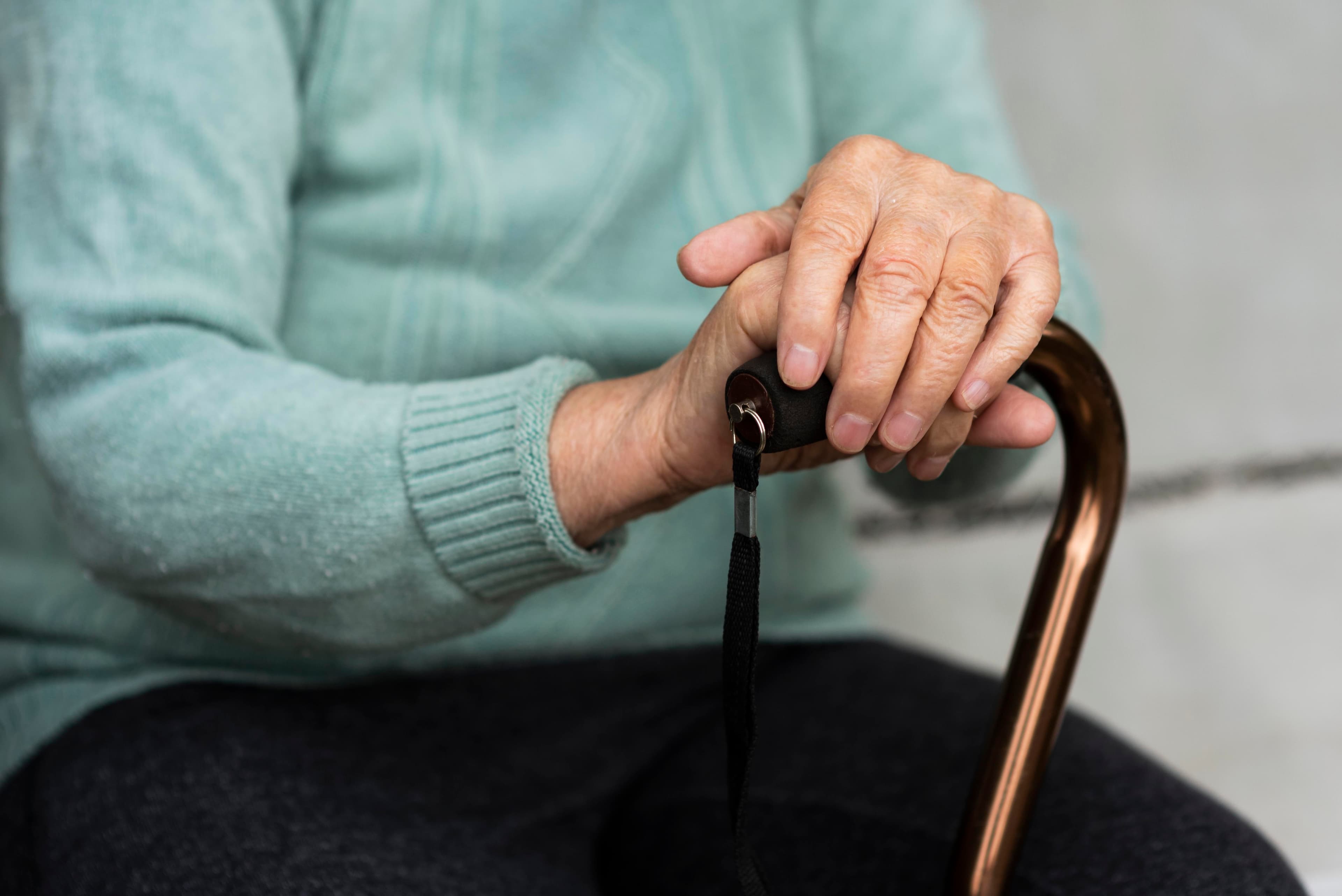
"Stability is key when selecting mobility aids." Learn the critical factors: height, grip, and base type — that you must check before buying to prevent falls.
Choosing a walking stick might seem simple, but for an elderly person, it is a decision that directly affects their safety and independence. The wrong stick can cause back pain, shoulder strain, or even lead to a fall. In this guide, we will break down exactly how to select the perfect mobility aid.
1. The Importance of Correct Height
The most common mistake people make is buying a stick that is too high or too low. A stick that is too high forces you to hunch your shoulders, leading to neck pain. One that is too low causes you to stoop, straining your back.
How to measure: Stand upright with your arms relaxed by your sides. The handle of the stick should align with the crease of your wrist. When you hold the handle, your elbow should bend slightly at about 15 degrees.
2. Choosing the Right Handle Grip
Hands come in all shapes and sizes, and so do walking stick handles. For those with arthritis, a standard crook handle might be painful to grip tightly. In such cases, a Fischer stick (orthopedic grip) is recommended as it contours to the hand and spreads the pressure.
3. Single Tip vs. Quadripod
Standard walking sticks have a single tip and are great for balance. However, if the user has had a stroke or has significant instability, a Quadripod (4-legged) stick provides a much wider base of support and can stand on its own, which is a huge convenience.
Remember, a walking stick is not just a tool; it's a partner in your daily movement. Take the time to choose the right one.
About the Author
Harshit Gupta
Harshit Gupta is the founder of NanoMed, a company that specializes in selling medical equipment to families. He has over 2 years of experience in medical equipment business.